.svg)
.svg)


What Dental AI Should Mean for Patients: Clearer Answers and More Personal Care
By Dr. Iman Yaz, Bow River Dental Centre
At Bow River Dental Centre, we have always tried to balance two things: staying current with modern dentistry while remaining grounded in the kind of personal, comfortable care our patients expect from a family-owned practice.
For us, continuing education is a big part of that.
Attending dental conferences, learning about new technologies, and understanding how the profession is evolving helps us continue improving the care we provide here in Cochrane. It allows us to evaluate new tools carefully, stay informed on changes in dentistry, and help ensure our patients can access high-quality, modern care close to home.
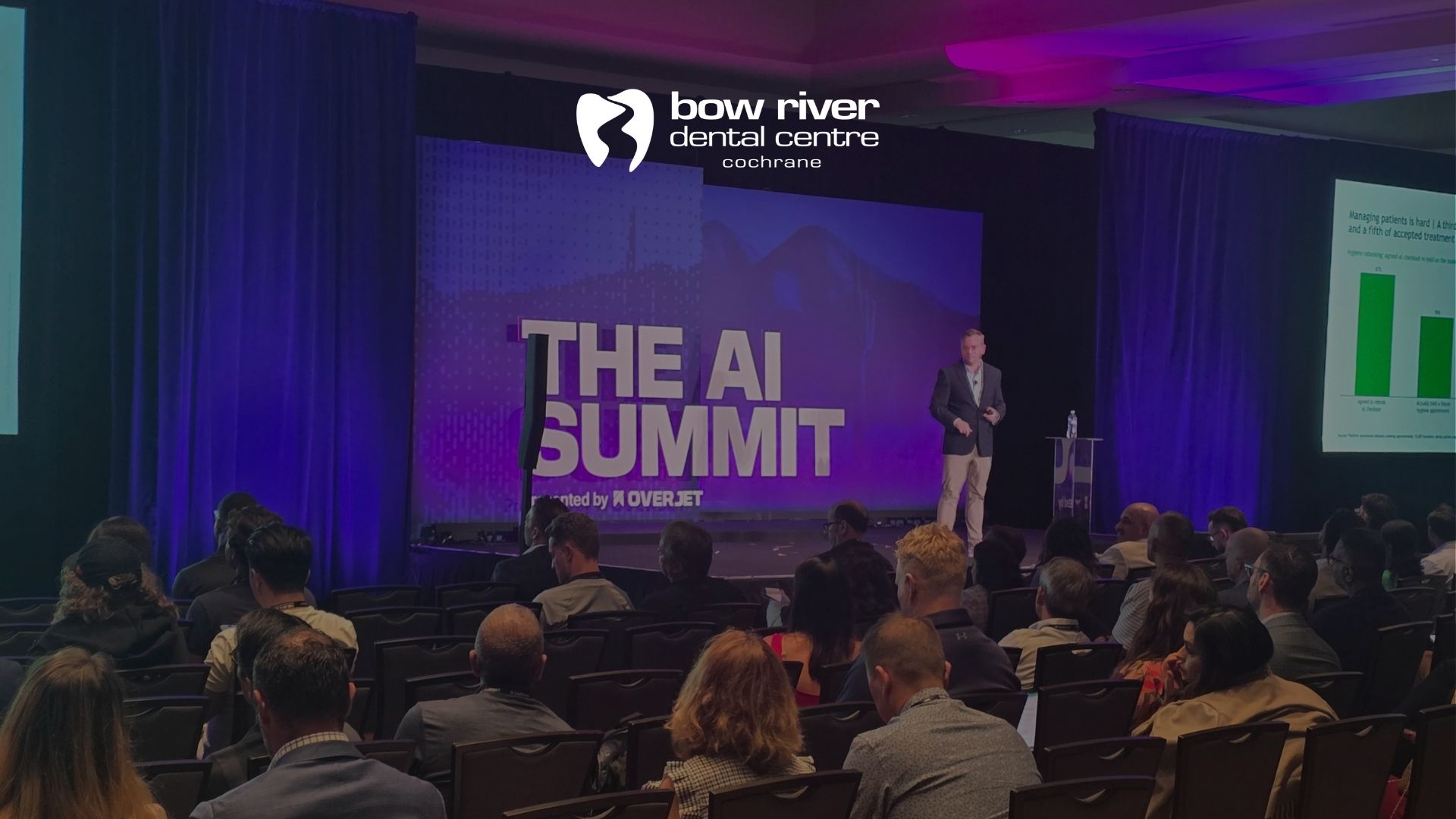
Most recently, I attended an AI-focused dental conference in Arizona hosted by Overjet, where dentists and technology developers discussed how artificial intelligence is beginning to support areas such as dental imaging, documentation, patient communication, and clinical workflows.
For me, the most important question was not how much AI we can bring into a dental office.
It was this: does the technology help us take better care of the person sitting in the chair?
Helping you understand what we see
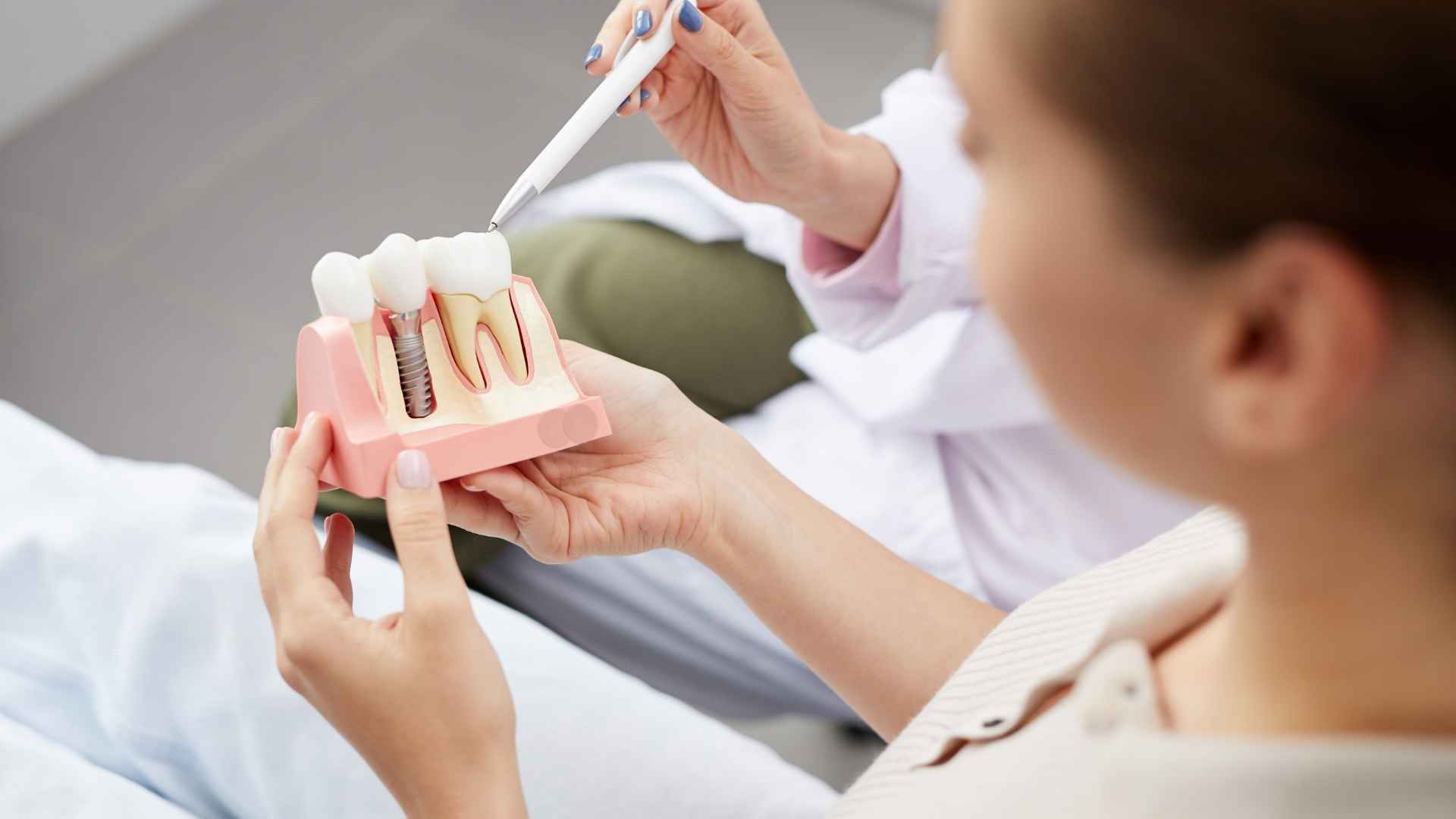
Dental images are not always easy to interpret without explanation. A dentist may recognize an area that deserves attention, while a patient sees a complicated X-ray and is left wondering what it actually means.
AI-assisted imaging is one example of how technology may help support that conversation. Some systems can visually identify or highlight areas on dental images for a dentist to review and discuss with the patient.
That can be useful, but the technology itself is not the outcome.
The outcome should be a clearer conversation.
Your dentist still needs to connect what appears on an image with your examination, symptoms, history, and concerns. A highlighted area should begin a discussion, not end it.
You should understand what was found, why it matters, what your options are, and what the next step could be.
If technology can help make those conversations easier to understand and give patients greater confidence in the decisions they make about their care, that is where I see real value.
Technology should support your dentist's judgment
AI is a tool, not a substitute for a dental professional.
Like other technologies, AI systems can make mistakes. Their output needs to be reviewed and considered appropriately rather than accepted without question.
Alberta's Office of the Information and Privacy Commissioner has also identified issues such as accuracy, bias, privacy, transparency, and human oversight as important considerations when artificial intelligence is used in health care.
Those are important safeguards.
At Bow River Dental Centre, our view is that technology should support the care team's judgment and improve the patient's understanding of their oral health, not replace either one.
Treatment decisions are still personal. They need to take into account your examination, your dental history, your priorities, and the options available to you, including the choice not to proceed with treatment.
That conversation between a patient and their dentist remains essential.
Staying current without losing what matters
Dentistry will continue to change.
Artificial intelligence is one part of that, alongside advances in imaging, materials, equipment, treatment techniques, and many other areas of care.
Our responsibility is to continue learning about those developments, understand where they can genuinely help, and make thoughtful decisions about what belongs in our practice.
For our patients, that means continuing to provide modern, comfortable dentistry here in Cochrane while staying true to the values Bow River Dental Centre has been built around.
Technology should help us explain things more clearly, deliver care more effectively, and improve the patient experience.
But it should never come at the expense of the personal side of dentistry.
The goal is not to use technology simply because it is new.
The goal is to keep learning, keep improving, and use the right tools when they help us provide better care for the people and community we serve.
.svg)
.avif)


.png)
