.svg)
.svg)


Dental Implants Need Care Too: What healing, maintenance, and long-term success really involve
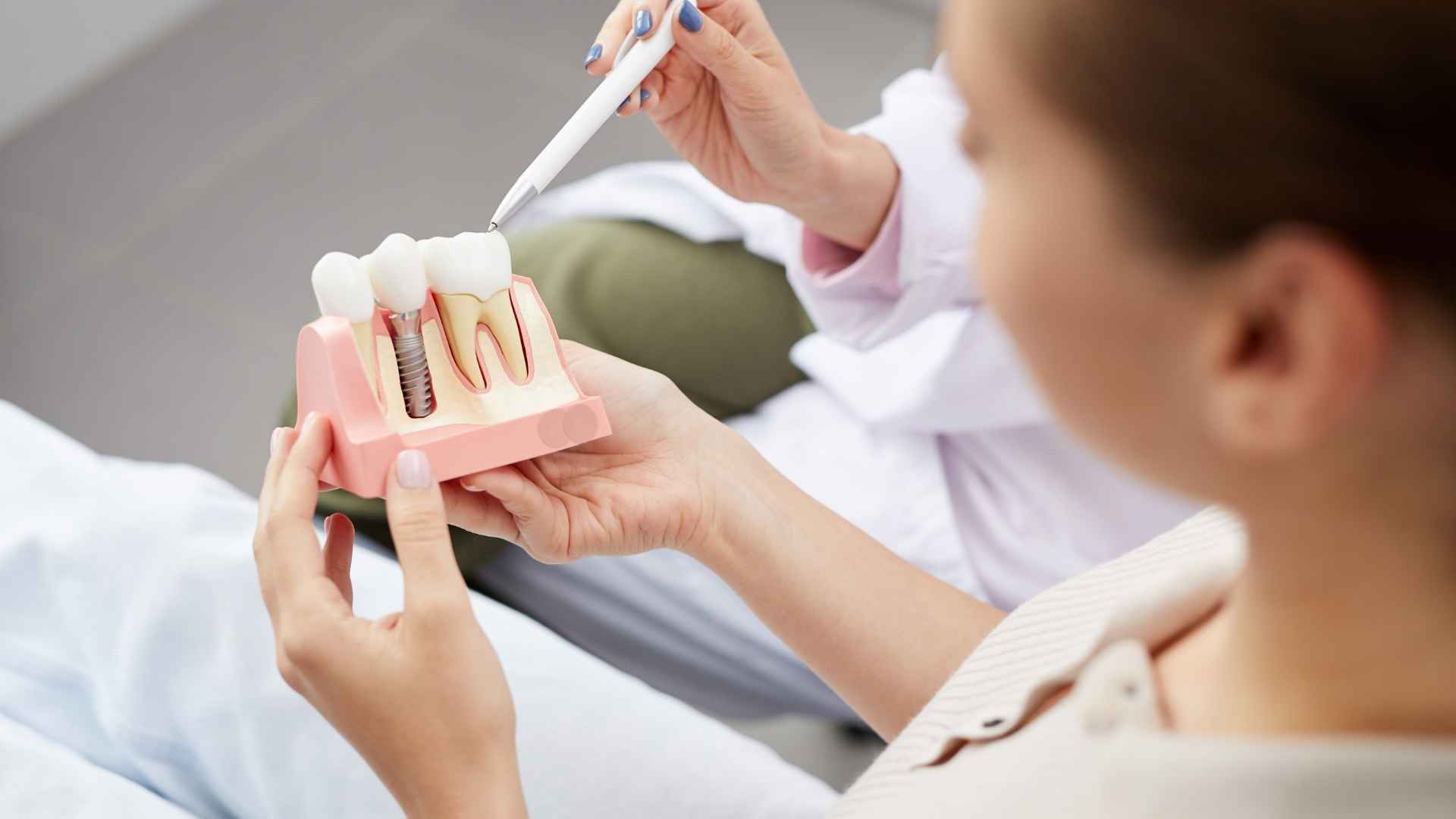
A dental implant can be an excellent way to replace a missing tooth, but it is not a maintenance-free or indestructible substitute. Understanding how an implant heals - and how it differs from a natural tooth - can help you protect it for the long term.
First, what is a dental implant?
The word implant is often used to describe the whole replacement tooth, but the restoration is actually a small system. The implant fixture is the root-shaped part placed in the jawbone. An abutment connects to the implant, and the crown is the visible tooth-shaped part you bite and smile with.
Each part has a different job. The implant must remain stable in bone, the surrounding gum must stay healthy, and the crown and connecting screw must tolerate chewing forces. Long-term success depends on all of these parts working together.
Osseointegration: how the implant becomes stable
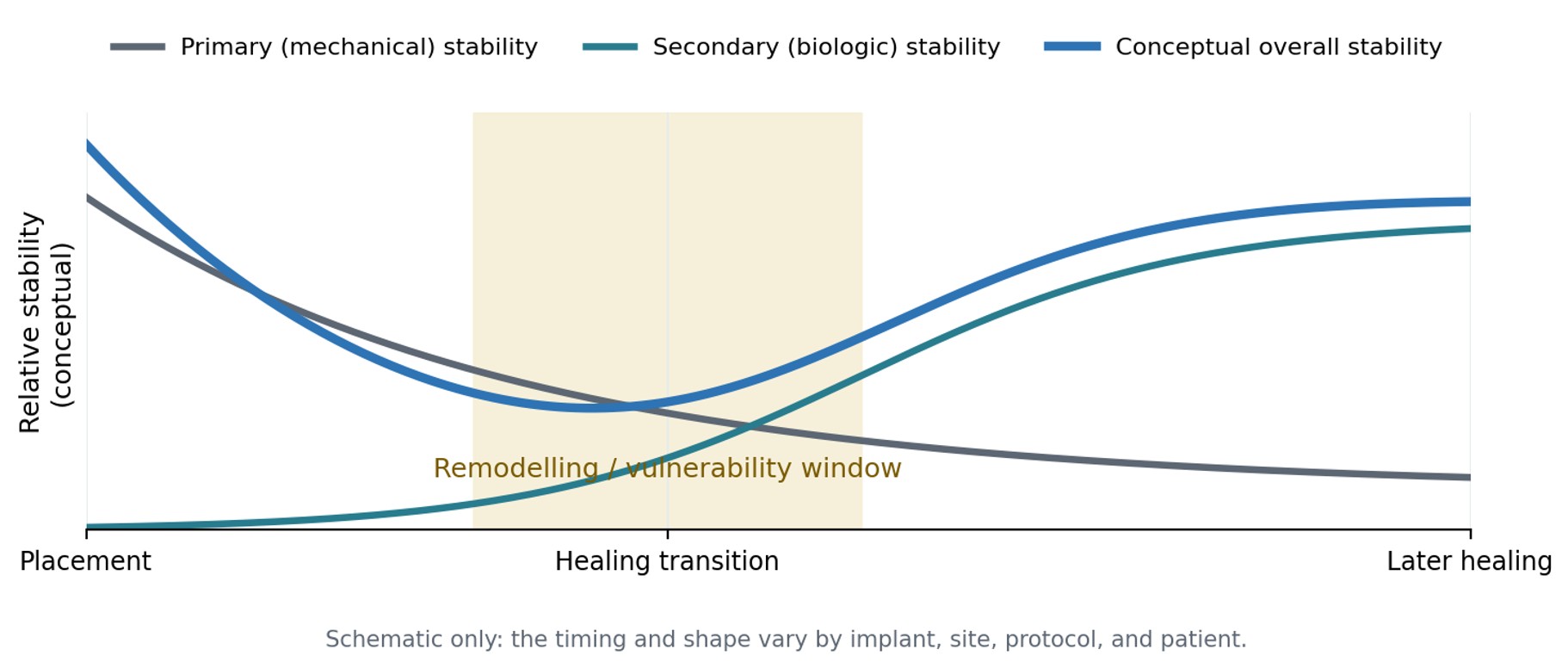
After the implant is placed, the surrounding bone heals and forms a close biological connection to its surface. This process is called osseointegration. At first, the implant is held mainly by the mechanical grip created during placement. As bone remodels, some of that early stability can decrease before new biological stability becomes stronger.
That transition is one reason your dental team may ask you to avoid chewing hard foods on the area or disturbing it during healing. An implant can feel comfortable while important changes are still occurring below the gum. Comfort alone does not prove that the implant is ready for its final crown.
WHY THE TIMELINE IS INDIVIDUALIZED
There is no single healing time that applies to every implant. Bone quality, implant location, grafting, initial stability, medical history, tobacco exposure, diabetes control, medications, and the planned restoration can all affect the schedule. The surgeon and restoring dentist determine when it is appropriate to proceed.
Can an implant and tooth be placed on the same day?
Sometimes. Immediate implant placement, an immediate temporary tooth, or immediate loading can be appropriate in carefully selected situations. However, receiving a tooth quickly does not mean that biological healing has already finished. The temporary restoration may need to be kept out of heavy contact while the implant integrates.
In other situations, a staged approach is safer: extraction, bone or soft-tissue healing when needed, implant placement, osseointegration, and then the final crown. The best sequence is the one that gives your individual site the most predictable result, not necessarily the shortest calendar.
Four common implant myths
- Myth: Every missing tooth can receive an immediate implant and final crown. Reality: Same-day treatment is possible only when the site, implant stability, bite, and patient factors allow it. Even then, bone healing continues for weeks or months.
- Myth: Implants are easier to clean than natural teeth. Reality: They cannot develop a cavity, but plaque can still inflame the gum and damage supporting bone. Cleaning must be thorough and tailored to the shape of the restoration.
- Myth: An implant is a one-time expense with no future care. Reality: The implant fixture may function for many years, but the crown, screw, or other components can wear, loosen, chip, or require replacement. Professional maintenance remains important.
- Myth: Once the crown is attached, regular dental visits are optional. Reality: Checkups allow the dental team to monitor the gum, bone, bite, cleanliness, crown, and connecting components before a small concern becomes a larger one.
How is an implant different from a natural tooth?
A natural tooth is suspended in bone by a periodontal ligament. This tiny ligament contains fibres and sensory receptors, allows a small amount of movement, and helps the tooth respond to biting pressure. A dental implant is connected directly to bone and does not have that same ligament.
The gum seal around an implant is also organized differently from the attachment around a natural tooth. It still acts as a protective barrier, but it may be more vulnerable to plaque and inflammation. Because implants move less than teeth, your dentist also pays close attention to the bite when the crown is placed and during future checkups.
AN IMPORTANT BENEFIT - AND AN IMPORTANT LIMITATION
The implant and its crown cannot decay like a natural tooth. That is valuable, especially for people at high risk of cavities or dry mouth. However, being cavity-resistant does not make the implant immune to gum inflammation, bone loss, mechanical wear, or complications.
What can happen around an implant?
Bacterial plaque can collect where the crown meets the gum. Early inflammation limited to the soft tissue is called peri-implant mucositis. It may cause redness, swelling, or bleeding and can often be controlled when it is recognized early and the causes are addressed.
Peri-implantitis involves inflammation together with progressive loss of supporting bone. It is more difficult to treat and may require care from a dentist or periodontist with experience in implant complications. Previous gum disease, poor plaque control, smoking, and poorly controlled diabetes are among the factors associated with higher risk.
DO NOT WAIT FOR PAIN
Implant disease may develop with little or no discomfort. Bleeding during cleaning, swelling, pus, recession, a persistent bad taste, food trapping, or a loose-feeling crown should be assessed even if the implant does not hurt.
Your everyday implant-care routine
The correct cleaning tools depend on whether you have a single crown, an implant bridge, or a full-arch restoration. Your dental hygienist can select devices that fit the space without damaging the tissue or restoration. A typical plan may include:
- Brush twice daily: Use a soft toothbrush or power brush and clean carefully where the crown meets the gum.
- Clean between teeth every day: Floss, implant-specific floss, an interdental brush, or a water flosser may be recommended depending on the shape and access.
- Protect the tissues: Use the size and technique demonstrated by your dental team. A device that is too large or used forcefully can cause trauma; one that is too small may leave plaque behind.
- Control modifiable risks: Avoid tobacco, work with your physician to manage diabetes, and tell your dentist about medical or medication changes that may affect healing.
- Attend individualized maintenance visits: Your recall interval should reflect your gum history, home-care effectiveness, implant design, and risk factors rather than a one-size-fits-all schedule.
What your dental team checks
At implant maintenance visits, the team may examine plaque levels, bleeding, tissue shape, probing measurements, the fit and stability of the restoration, and changes in your bite. Radiographs are taken when clinically indicated to compare the supporting bone with previous records. Establishing a healthy baseline after the crown is placed makes future comparisons more meaningful.
When should you contact the dental office?
- The crown or implant feels loose, mobile, or different when you bite.
- Your bite suddenly feels high or uncomfortable.
- The gum repeatedly bleeds, swells, recedes, or releases fluid or pus.
- You notice persistent pain, pressure, a bad taste, or an odour from the area.
- Food begins collecting around the crown or your usual floss or brush no longer passes normally.
- The crown chips, fractures, or feels rough.
The bottom line
Dental implants are highly useful restorations, but they are not set-it-and-forget-it devices. Protecting the healing phase, cleaning the implant every day, controlling health risks, and maintaining regular professional reviews all matter. The goal is not simply to keep the implant in the mouth; it is to keep the surrounding tissue, bone, bite, and restoration healthy and comfortable.
HAVE AN IMPLANT - OR CONSIDERING ONE?
Bow River Dental Centre can assess the implant, surrounding tissues, restoration, bite, and home-care access, then recommend a maintenance plan suited to your needs. Visit bowriverdental.ca to contact our Cochrane team.

.svg)
.avif)


.png)
